


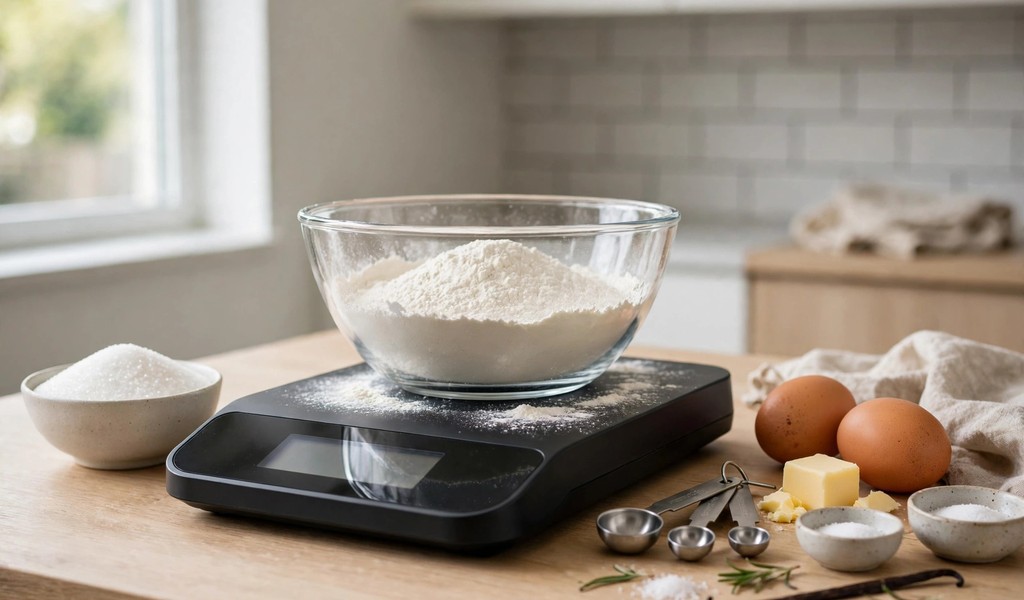
Place your scale on a flat surface and switch it on. Then set an empty bowl on the platform and press tare to zero the display. After that, pour each ingredient into the bowl until the display shows your target weight.
Home cooks often measure flour with cups, yet scooping style changes the amount. Consequently, the same recipe can turn out dry one day and perfect the next. A kitchen scale removes that guesswork completely because weight stays constant regardless of scooping style. Therefore, bakers who weigh ingredients enjoy consistent results batch after batch.
This guide walks you through setup, taring, weighing, and troubleshooting in simple steps. You will also learn handy conversions for common ingredients and liquids. Finally, you will discover mistakes that quietly ruin accuracy and easy ways to avoid them.
Why Weight Beats Volume
One cup of flour can weigh 120 grams or 170 grams, depending on scooping method. That 50 gram gap changes dough texture, cake crumb, and cookie spread dramatically. Professional bakers weigh ingredients for this exact reason, and home bakers gain the same advantage. Meanwhile, sticky ingredients like honey and peanut butter cling to cups and skew volume readings further.
Weight also simplifies scaling recipes up or down without awkward fractions. Doubling a recipe means doubling each gram amount, nothing more. In addition, weighing cuts cleanup because you can measure every ingredient into one bowl. As a result, many cooks retire their cup sets once they try this method.
Set Up Your Scale Correctly
Start with a hard, level surface because soft mats and tilted counters distort readings. Next, switch the scale on and let the display settle at zero. Then check the battery indicator, since a weak battery can produce drifting or inconsistent numbers. Finally, choose grams or ounces to match your recipe before you weigh anything.
Most home scales handle up to 11 pounds, which covers nearly every baking task. However, large dough batches or heavy pots can exceed that limit quickly. In that case, weigh ingredients in smaller portions and add the amounts together. Also, keep the platform clean, since crumbs under a bowl can tilt it slightly.
Use the Tare Function Step by Step
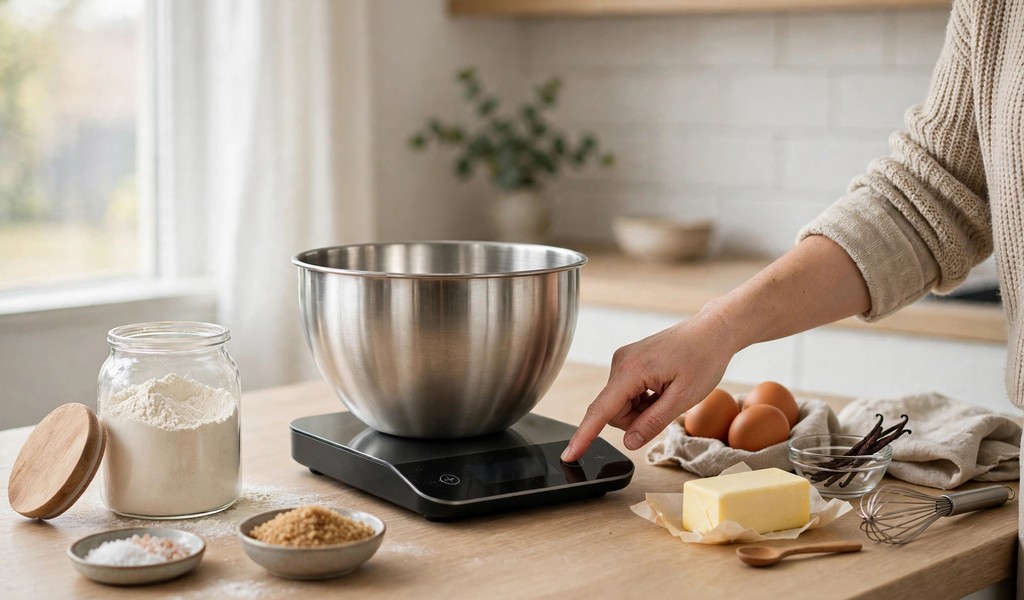
The tare button resets the display to zero after you place a container on the scale. Consequently, the scale measures only the ingredient, never the bowl. Press tare again after each ingredient, and you can build an entire recipe in one bowl. This single habit saves time, reduces dishes, and prevents arithmetic mistakes.
- Bowl first: set your empty bowl on the platform before switching the scale on.
- Zero check: press tare and confirm the display reads zero before pouring.
- Slow pour: add ingredients gradually and stop slightly before your target weight.
- Overpour fix: spoon out excess carefully instead of starting the whole measurement over.
- Unit switch: toggle between grams and ounces freely without losing your current measurement.
Weigh Dry Ingredients With Confidence
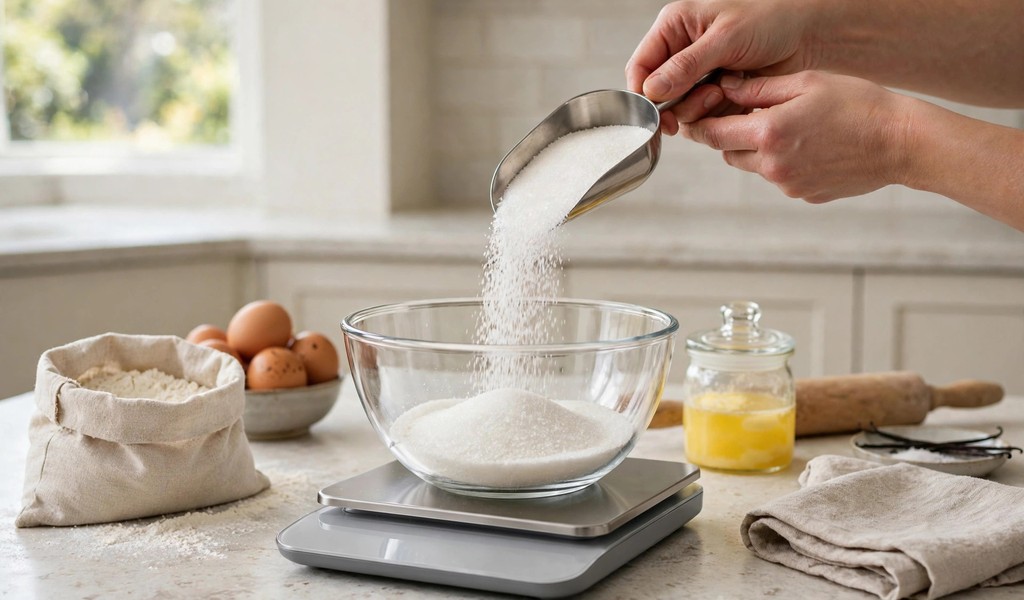
Pour flour slowly into the bowl and watch the display climb toward your target. Stop just short of the target, then tap in the last few grams carefully. This approach prevents overshooting, which matters most with flour, cocoa, and powdered sugar. Meanwhile, spoon fluffy ingredients lightly if you ever compare weights against older cup recipes.
Common conversions help when a recipe lists only cups and spoons. One cup of all-purpose flour weighs about 120 grams when spooned and leveled. Similarly, one cup of granulated sugar weighs about 200 grams, and butter weighs 226 grams per cup. Record your own conversions in a notebook so future bakes match perfectly.
Weigh Liquids and Sticky Ingredients
A scale handles liquids easily because weight ignores meniscus lines and awkward markings. For example, one cup of water weighs about 240 grams, but honey weighs more per cup. Therefore, always match the gram target to the specific liquid, never to a generic cup value. This habit keeps syrups, oils, and sauces consistent every time.
Honey weighs about 340 grams per cup, so a generic water conversion would undermeasure it badly. Similarly, oil weighs less than water per cup, so check a conversion chart first. Smear a thin coat of oil inside the bowl first for sticky foods. Afterward, the ingredient slides out cleanly and leaves almost nothing behind.
Fix Common Scale Mistakes
Many errors come from rushing, not from faulty equipment. For instance, adding ingredients too fast overshoots the target before the display catches up. Likewise, bumping the scale mid-pour can reset the reading without warning. Slow down, keep the scale still, and let the display settle between additions.
Small amounts challenge most kitchen scales, which often read only whole grams. Consequently, measuring spoons suit salt, yeast, and baking soda better than a scale. Similarly, check calibration occasionally with a known weight, such as an unopened bag of sugar. If readings drift repeatedly, replace the battery before you blame the scale.
Choose the Right Scale for Your Kitchen
Look for a digital display, a tare button, and gram and ounce modes at minimum. In addition, a backlit display helps in dim kitchens, and a removable platform eases cleaning. Capacity matters too, so pick a model that handles your largest mixing bowl comfortably. Finally, compare prices, since reliable home scales often cost less than a cup set.
Beyond baking, a scale supports portion control and meal planning with equal precision. It also earns its keep during a kitchen upgrade. See this guide to a kitchen upgrade for a step-by-step refresh. Weigh pasta, rice, and proteins to match serving sizes exactly. As a result, nutrition tracking becomes simpler and leftovers shrink noticeably. Many cooks soon weigh coffee beans, too, for a repeatable morning brew.
Frequently Asked Questions
Is a kitchen scale more accurate than measuring cups?
Yes, a scale beats cups for dry ingredients because weight stays constant while scooping style changes volume.
Can I use a kitchen scale for liquids?
Yes, weigh liquids directly in a tared bowl using gram targets for each specific liquid.
What does the tare button do?
The tare button resets the display to zero so the scale weighs only the ingredient.
Do I need a scale for all baking?
No, forgiving recipes like muffins tolerate small variations, but scales improve bread, cakes, and pastries noticeably.
How do I convert a cup recipe to grams?
Use a reliable conversion chart, weigh each ingredient once, and note the gram amounts.
Conclusion
A kitchen scale turns guesswork into repeatable success with one small habit. Start by taring your bowl, weigh each ingredient slowly, and record conversions you use often. Soon, your cakes will rise evenly and your bread will bake consistently. Grab your scale today and weigh your next recipe from start to finish.