


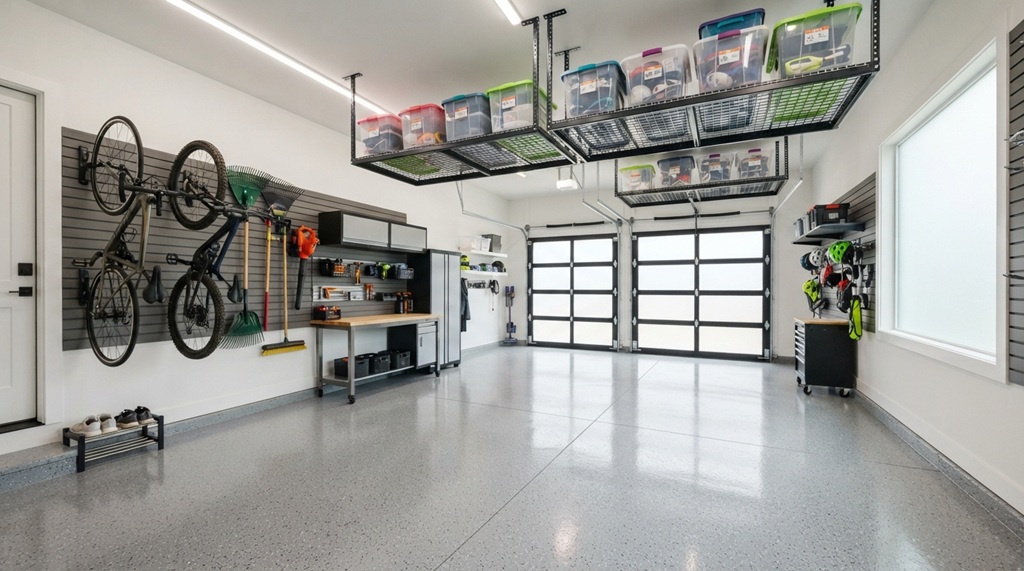
The fastest way to organize garage storage and maximize floor space is to get everything off the ground and onto walls, ceilings, and vertical shelving then group items into zones based on how often you use them. A garage that feels chaotic usually isn’t a size problem; it’s a system problem. Once you sort, purge, and assign every category of item a fixed “home,” the clutter has nowhere left to pile up.
This guide walks through a practical, room-by-room approach to reclaiming your garage: how to plan the layout, which storage systems are worth the investment, and how to keep the space organized long after the initial cleanup. Whether you’re parking two cars, running a workshop, or just trying to find the holiday decorations without a treasure hunt, these steps apply.
You don’t need a full renovation or a five-figure budget to see a real difference. Most of the transformation comes from decluttering honestly and rethinking how you use vertical space two things that cost more time than money.
Start With a Full Declutter Before Buying Any Storage

You can’t organize what you haven’t sorted, so decluttering always comes before buying bins, shelves, or racks. Skipping this step is the number one reason garage organization projects fail within a few months people buy storage for things they should have thrown away.
Sort Everything Into Four Piles
Pull everything out of the garage (or clear it section by section if that’s not realistic) and sort into: Keep, Donate, Sell, and Trash. Be honest about anything you haven’t touched in over a year expired paint, broken tools, and dried-out garden chemicals are common garage offenders that just take up space.
Group Like With Like
As you sort the “Keep” pile, group items into categories: seasonal decor, sports and recreation gear, tools, automotive supplies, yard equipment, and overflow household items. This grouping is what makes zoning (covered below) actually work, because you’ll already know roughly how much space each category needs.
Map Out Storage Zones Based on How You Use the Space
A zoned garage keeps related items together so you’re not walking from one end of the space to the other every time you need something. Think of it the way a kitchen is zoned into prep, cooking, and cleanup areas a garage benefits from the same logic.
Common zones include a parking zone, a tools/workbench zone, a sports and outdoor gear zone, a seasonal storage zone, and a “in-and-out” zone for items used weekly, like trash bins or a cooler. Map these zones on paper or with painter’s tape on the floor before you install any shelving, since it’s much easier to adjust a plan than to move a bolted-in shelving unit.
Keep the zone closest to the door for whatever you use most for most households, that’s yard tools or sports gear, not the seasonal holiday bins that only come out twice a year.
Elevate Storage to Reclaim Prime Floor Real Estate
Floor space is the most valuable real estate in your garage, making vertical elevation the single most impactful strategy in any high-end transformation. Shifting heavy equipment, tools, and seasonal gear onto heavy-duty slatwalls, pegboards, and overhead racks instantly restores an open, functional layout. As you clear physical space to create a dedicated workshop or vehicle park, maintaining a comfortable environment becomes paramount—making proper airflow just as vital as smart organization. If your setup lacks natural ventilation, vent a garage without windows provides essential techniques for controlling temperature, reducing moisture, and protecting your stored assets.
Install Wall-Mounted Systems
Slatwall panels, pegboards, and track-based systems let you hang tools, hoses, and sports equipment at eye level, keeping the floor clear for parking or movement. These systems are also flexible you can rearrange hooks and shelves as your storage needs change, without any new holes in the wall.
Use Overhead and Ceiling Storage
Ceiling-mounted racks are ideal for items you only need a few times a year, like holiday decorations, luggage, or camping gear. According to industry experts in home organization, overhead storage is one of the most underused areas in a typical garage, since most people only think in terms of floor and wall space.
Add Tall, Narrow Shelving Units
Shelving that runs floor-to-ceiling but stays narrow in depth (12–18 inches) stores a surprising amount without eating into your walking or parking space. Reserve the lowest shelves for heavy items like paint cans or power tools, and the highest shelves for lightweight, infrequently used items, since lifting heavy boxes overhead is a real safety risk.
Choose the Right Storage Containers for What You’re Storing
Not every item belongs in the same type of bin, and mismatched containers are a common reason garages fall back into clutter. Matching the container to the contents keeps things protected and easy to find.
- Clear plastic bins work best for anything you need to identify at a glance, like seasonal decor or off-season clothing.
- Stackable totes with locking lids are worth it for items stored long-term, since they protect against dust, pests, and moisture better than cardboard.
- Metal or heavy-duty shelving should hold your heaviest items think bags of concrete, large tools, or bulk household supplies.
- Pegboard hooks and magnetic strips are better than bins for anything you reach for often, like hand tools, since digging through a container defeats the purpose of organizing in the first place.
Label every container on the side, not just the top, so you can identify it while it’s still on a shelf rather than pulling it down first.
Create a Dedicated Zone for Vehicles and Parking

If maximizing floor space for parking is your main goal, this deserves its own planning step rather than being an afterthought. Mark out the exact footprint your vehicle needs, including door-swing clearance, before deciding where shelving or cabinets can go.
Floor markings either painted lines or simple stick-on tape help every driver in the household park consistently, which prevents the slow creep of “temporary” boxes ending up in the parking lane. If you’re tight on space, look at fold-down or wall-mounted workbenches and bike racks that can be tucked away when the car needs the room.
One angle worth considering that’s often skipped: measure your garage door’s clearance when it’s open, not just the floor space. Overhead storage racks installed too low are a common and expensive mistake, since garage doors need vertical clearance to fully retract.
Maintain the System So Clutter Doesn’t Come Back
An organized garage stays organized only if the system is easy to maintain, which means every item needs a specific, logical “home” it always returns to. If putting something away is harder than leaving it on the floor, it will end up on the floor.
Set a recurring reminder seasonally works well to do a quick 15-minute reset: return anything that’s drifted out of its zone, and re-evaluate whether any category has outgrown its assigned space. This is also a natural time to redo the four-pile sort from step one, since storage needs shift as hobbies, kids’ ages, and seasons change.
Involve everyone in the household in the labeling and zoning system, not just the person who did the initial organizing. A system only one person understands tends to break down within a few months.
Frequently Asked Questions
What is the cheapest way to organize a garage?
Decluttering is free and makes the biggest difference, since removing items you don’t need instantly frees up space. After that, repurposing items you already own like using tension rods as vertical dividers or old crates as bins costs far less than buying a full shelving system.
How much floor space should I leave for walking around a parked car?
Most home organization guides recommend at least 24 to 36 inches of clearance around a parked vehicle for doors to open comfortably and for people to walk through safely. If your garage is tighter than that, prioritize wall and ceiling storage over any floor-standing units.
Should I use open shelving or closed cabinets in a garage?
Open shelving is generally better for items you use often and want to see at a glance, like tools or sports gear, while closed cabinets suit items sensitive to dust or that you’d rather keep out of sight, like chemicals or paperwork. Many organized garages use a mix of both depending on the zone.
How do I organize a small garage that also needs to fit a car?
Focus almost entirely on wall and ceiling storage, since floor space is too limited to spare for shelving units. Fold-down workbenches, slatwall panels, and overhead racks let you store a full set of tools and seasonal items without reducing your parking footprint.
How often should I reorganize my garage?
A seasonal check-in, roughly four times a year, is usually enough to catch clutter before it builds up again. Major categories like seasonal decor naturally get touched during these check-ins anyway, making it an easy time to reassess what’s still needed.
Conclusion
Organizing a garage and maximizing floor space comes down to three repeatable steps: declutter honestly, move as much as possible off the floor and onto walls or the ceiling, and give every category of item a fixed, logical home. None of this requires a total renovation a weekend of sorting, a few wall-mounted systems, and a bit of ongoing maintenance can turn a cluttered garage into a functional, organized space that actually stays that way.