


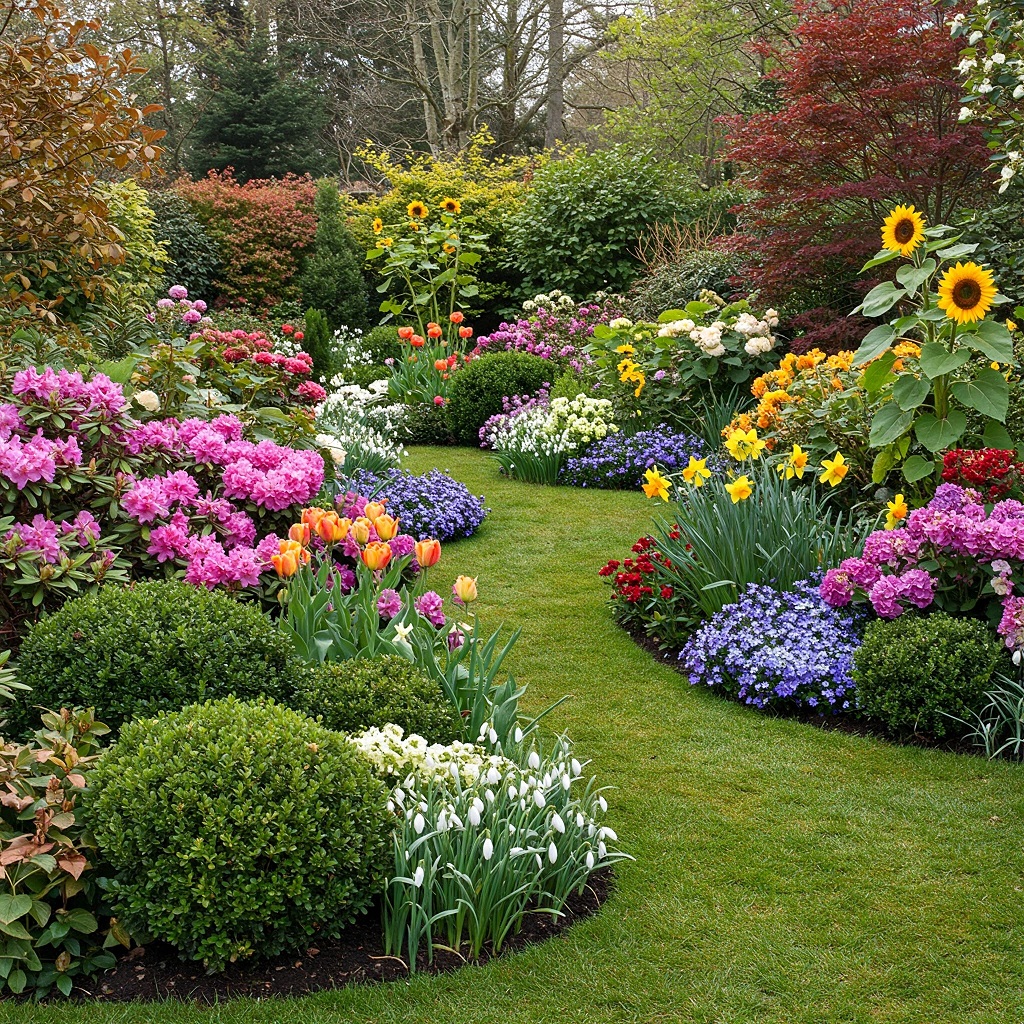
Picture a garden that’s not only full of life, but also increases your home’s worth. A garden that blooms all year can draw in all kinds of wildlife and also be your chill spot to unwind.
To get there, you have to plan a bit, pick the right plants, and keep things tidy. This guide gives you effective tips on mixing up plant types, setting up your garden smartly, and taking care of those plants.
With the right choices, any garden can become a stunning spot filled with colour and energy all year round.
Choose the Right Plants
Do you want a garden bursting with colour all year? You simply have to pick the right plants. Mix ones that bloom at different times for a lively look.
Roses, daisies, and camellias are perfect as they flower at various times. Check your local weather to see what suits your garden.
A bit of climate research helps, too. Use a planting calendar to track bloom times. As one plant fades, another can take over. Mixing plants is key for nonstop colour, keeping your garden vibrant throughout the year.
Plan Your Garden Layout
A smart garden layout boosts its charm. Add climbers like wisteria or clematis to make the most of vertical space and show off lovely flowers. Group plants with similar water and light needs for easier care and better health.
Place taller plants at the back and shorter ones in front for space and sunlight. Paths of gravel, stepping stones, or bark make it easy to move around for tasks like pruning without disturbing plants.
A well-planned garden looks amazing, is easy to maintain, and is fun to explore all year.
Incorporate Evergreens for Structure
Evergreens are important for keeping your garden looking awesome all year round. They are your garden’s backbone, staying bright and green no matter the season.
You could try shrubs like boxwood or holly for cool borders or standout spots, which really help the colourful flowers pop.
When picking evergreens, think about your garden’s weather and soil to make sure they grow well. Mixing different types can add some serious style, like pairing tall, skinny ones with shorter, bushy plants for a nice layered look.
They’re great for lining paths, making neat hedges, or highlighting special parts of your garden, keeping everything looking good and tidy all year.
Even when there aren’t any flowers blooming, evergreens keep things fresh and nice. By adding these plants to your garden thoughtfully, it stays lively and welcoming all the time.
Use Seasonal Bulbs
They are amazing for brightening up the space. You will simply love their unique beauty every season.
Plant them about three times their height to protect them from frost. Stagger your planting for longer blooms. This keeps your garden lively with little effort, which is why gardeners love them. Pop bulbs in flower beds or under trees, and watch them create stunning displays.
Implement Companion Planting
Combining different plant species in your garden can lead to a truly colourful and dynamic outdoor setting. It’s an effective way to create a harmonious balance while making the best use of the available space.
Moreover, certain plants can help neighbouring plants grow healthily, thereby reducing dependence on additional support.
This approach is conducive to an environment that is respectful of nature and rich with biodiversity. If you’re interested, learn which flora mingle well together, providing a fun way to add variety and visual interest to your garden, regardless of the season.
Focus on Soil Health
This is really important for your garden’s success.
Firstly, analyse the soil’s pH and properties. This will show you areas where improvements can be made. Garden supply stores offer test kits to do just that.
Next, add some compost or manure to your soil. That enhances its water retention and also improves air circulation. It also stimulates the growth of your flowers’ roots.
You also need to mulch your garden. That, above all, helps retain water in the soil. Moreover, it suppresses weeds and also provides plants with nutrients.
The last bit is due to the mulch decomposing slowly. That provides your flowers with a constant food supply.
It is advisable to apply a layer measuring between two and three inches of this natural mulch. Besides, you can always consult local garden care specialists if needed.
Soil health plays a crucial role in promoting healthy and resilient plant growth. To achieve this, incorporate organic materials regularly and maintain optimal pH levels to promote effective nutrient absorption.
By emphasising proper soil care, you can create a thriving yard that remains vibrant throughout the year.
Pruning and Deadheading for Continuous Blooms
Maintaining a fabulous garden is primarily about regularly removing wilted flowers. This simple step allows plants to redirect their energy from seed production to continuous flowering, preventing the accumulation of withered petals.
Most plants need distinct trimming techniques, making it vital to identify the most effective methods for each type.
For example, roses thrive when subjected to regular deadheading during their prime blooming period. In contrast, some bushes should only be pruned after flowering to protect potential buds for the next year.
Pruning is not merely a matter of deletion. Rather, it’s an art of nurturing by shaping plants to unfold their natural appearance and enhance sunlight penetration.
This particularly benefits thick bushes and trees that urgently require thinning to permit unfettered light absorption, promoting commensurate healthy growth.
Timely pruning is inherent, as the optimal period often falls between late winter and early spring. This is when vegetation is under no heat-related stress and is primed for regenerative growth.
By consistently performing this routine, your garden will become a vibrant oasis teeming with flowers.
Consider Climate and Microclimates
Understanding your garden’s specific weather conditions is key to picking plants that bloom all year. Spotting microclimates, like sunny spots or shady corners, helps in choosing the right plants as well.
For example, areas near walls can be warmer, great for sun-loving plants. Shadier spots are good for plants like ferns and hostas.
For top blooms, choose plants suited to these spots. Try lavender or coneflowers for sunny areas, and hellebores or foxgloves for shade.
You could even use trellises to create microclimates by providing shade or wind protection, helping plants thrive. This makes sure your garden looks great and stays healthy.
Conclusion
Turning your outdoor space into a magical garden all year requires careful preparation. To do this, go for flora that blossom at different intervals, think outside the box when designing the layout, and monitor soil as well as irrigation levels.
With some effort and the correct technique, your garden can consistently flourish, giving you serenity and delight throughout the years.
Experiment with these methods and embark on a path toward a fantastical flower haven.