


You can landscape your backyard cheaply by planning first, reusing what you already have, and adding new elements in stages. You don’t need a big budget to create a yard you love. Small, smart choices make the biggest difference.
Many homeowners assume landscaping means hiring a designer and spending thousands of dollars. That’s simply not true. With a little research and some elbow grease, you can transform a bare or outdated backyard into a space that feels intentional and inviting.
This guide walks you through practical, low-cost ways to landscape your backyard. Each tip below is something you can start this weekend, whether your budget is $200 or $2,000.
Start With a Simple Plan Before You Spend Anything

A plan saves you money because it stops you from buying things you don’t need. Before you touch a shovel or visit a garden center, sketch your yard on paper.
Mark where the sun hits throughout the day. Note any wet or dry spots. Think about how you actually use the space now, and how you want to use it in the future. Do you need a play area for kids? A quiet reading nook? Room for a grill?
Smart Budgeting Strategies for DIY Landscaping
Establishing a firm overall spending limit before purchasing a single plant or bag of mulch is the secret to avoiding stealthy cost overruns that turn a small project into a major expense. By strategically allocating funds across specific categories such as flora, hardscaping supplies, and essential tool rentals you maintain clear oversight of every dollar spent while optimizing your overall return on investment. If you want to stretch your outdoor budget even further by turning part of your plot into a functional asset, exploring start a vegetable garden for fresh produce offers an elegant, cost-effective way to grow organic food right at home.
Prioritize One Zone at a Time
Trying to landscape the whole yard at once often leads to overspending. Instead, pick one area, like a patio or a flower bed, and finish it before moving to the next. This approach spreads out the cost and keeps the project manageable.
Reuse and Repurpose Materials You Already Have
Reusing materials is one of the fastest ways to cut landscaping costs. Look around your property, garage, and even your neighborhood before buying anything new.
Old bricks, broken pavers, or leftover wood can become a garden border or a small pathway. Cracked pots still work as planters if you place them in a shaded corner. Even old tires, painted and stacked, can hold soil for vegetables or flowers.
Check local classifieds and community groups for free materials. People often give away extra mulch, stone, or plants when they redo their own yards. This small effort can save you hundreds of dollars.
Choose Budget-Friendly Plants That Actually Thrive
The cheapest plants aren’t a bargain if they die within a season. Choose plants suited to your climate and soil, since they need less water, less fertilizer, and less replacing.
Buy Native and Perennial Plants
Native plants adapt well to your local weather, so they need less maintenance once established. Perennials return year after year, which means you avoid replanting costs every spring. Ask your local nursery which native perennials grow well in your area.
Grow From Seeds or Cuttings
Seeds cost far less than mature plants, sometimes just a few dollars per packet. Cuttings from a friend’s garden are even cheaper, often free. Both methods take more patience, but they stretch your budget significantly.
Divide and Share Plants
Many perennials, like hostas or daylilies, grow in clumps that can be divided. Splitting an established plant gives you two or more plants for the price of one. Trade divided plants with neighbors to build variety without spending extra money.
Use Mulch and Ground Cover to Cut Long-Term Costs
Mulch reduces weeding, watering, and replanting, which saves money over time. A few inches of mulch around your plants blocks weeds and holds moisture in the soil.
Look for cheaper mulch options first. Many cities offer free wood chips through local tree services or municipal programs. Straw and shredded leaves also work well and often cost nothing if you have access to them.
Ground cover plants, like creeping thyme or clover, spread over time and reduce the amount of grass you need to maintain. Less grass means less spent on seed, water, and mowing.
Build Simple DIY Hardscaping Instead of Hiring Contractors
Hardscaping, like pathways and small patios, usually costs the most in a landscaping project. Doing it yourself can cut that cost dramatically, especially for smaller spaces.
Create a Gravel or Paver Path
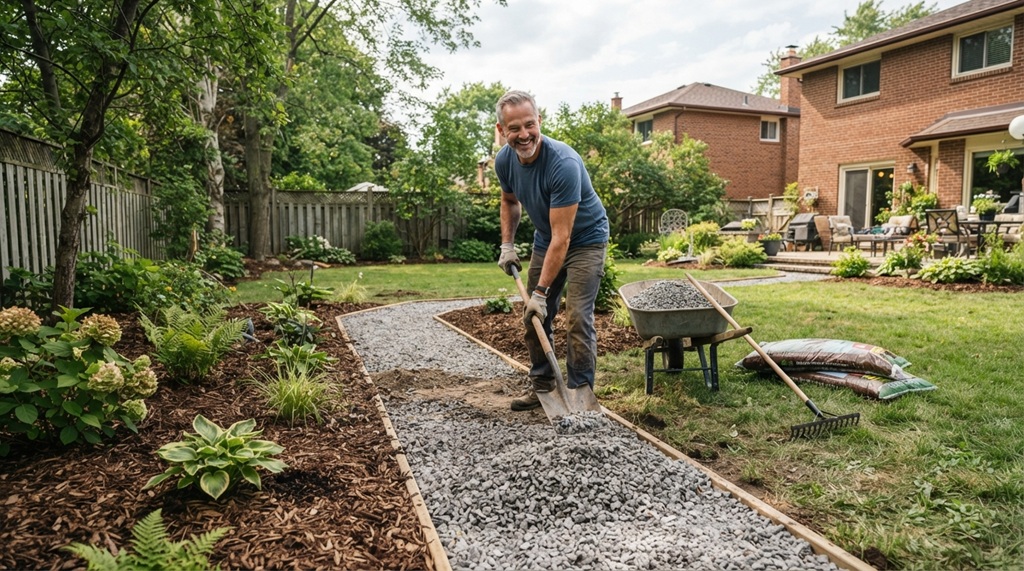
A gravel path is one of the cheapest hardscaping options available. Lay down landscape fabric, add a border, and pour in gravel. This project usually takes a single weekend and costs far less than concrete.
Add a Small DIY Patio
Reclaimed pavers or bricks can form a basic patio without professional installation. Level the ground, add a sand base, and lay the pavers in a simple pattern. Start small, since you can always expand the patio later as your budget allows.
Install Raised Garden Beds From Scrap Wood
Raised beds improve drainage and make gardening easier on your back. Untreated scrap wood, old pallets, or reclaimed lumber all work well for this project. This is a genuinely useful trick many guides skip: check with local construction sites or renovation crews, since they often give away leftover lumber for free just to avoid disposal fees.
Add Lighting and Décor Without Overspending

Outdoor lighting and décor make a yard feel finished, but they don’t need to be expensive. Small, thoughtful touches often make a bigger visual impact than costly additions.
Solar-powered path lights cost little upfront and need no wiring. String lights across a patio or deck add ambiance for a low price. Thrift stores and yard sales often have outdoor décor, like planters or garden statues, at a fraction of retail prices.
Paint is another low-cost transformation tool. A fresh coat on an old fence, planter box, or garden bench instantly refreshes the space without a full replacement.
Maintain Your Landscape to Avoid Future Costs
Regular upkeep protects your investment, since neglected yards often need expensive fixes later. A little maintenance now prevents bigger repair bills down the road.
Water plants early in the morning to reduce evaporation and lower your water bill. Trim plants regularly to keep them healthy, since overgrown plants are more prone to disease. Check your mulch layer each season and top it off as needed to keep weeds under control.
Frequently Asked Questions
How much does it cost to landscape a backyard on a budget?
A basic budget landscaping project can cost anywhere from $200 to $1,000, depending on yard size and materials. Costs stay low when you reuse materials, buy plants as seeds, and do the labor yourself. Larger hardscaping projects, like patios, will push costs higher even on a budget.
What is the cheapest way to landscape a backyard?
The cheapest approach combines free or reused materials, native plants grown from seed, and DIY labor instead of hired help. Mulch and ground cover also reduce long-term costs by cutting down on watering and weeding. Starting with one small zone, rather than the whole yard, keeps spending under control.
Can I landscape my backyard myself without experience?
Yes, most budget landscaping projects don’t require professional skills. Simple tasks like planting, mulching, and laying gravel paths are beginner-friendly. Online tutorials and local nursery staff can guide you through anything unfamiliar.
What plants are best for a low-budget backyard?
Native perennials are ideal, since they require less water and return each year without replanting. Ground covers like clover or creeping thyme also reduce long-term lawn costs. Buying seeds instead of mature plants stretches your budget even further.
How do I make my backyard look expensive without spending much?
Focus on a few high-impact touches, like fresh mulch, trimmed edges, and simple lighting. A clean, well-maintained yard often looks more expensive than one filled with costly items. Consistent upkeep matters more than how much you spend upfront.
Conclusion
Landscaping your backyard cheaply comes down to planning ahead, reusing what you have, and adding upgrades in stages. Small, budget-friendly choices, like native plants, DIY hardscaping, and free mulch, add up to a yard that looks well cared for. Start with one zone, stay consistent with maintenance, and your backyard will keep improving season after season.