


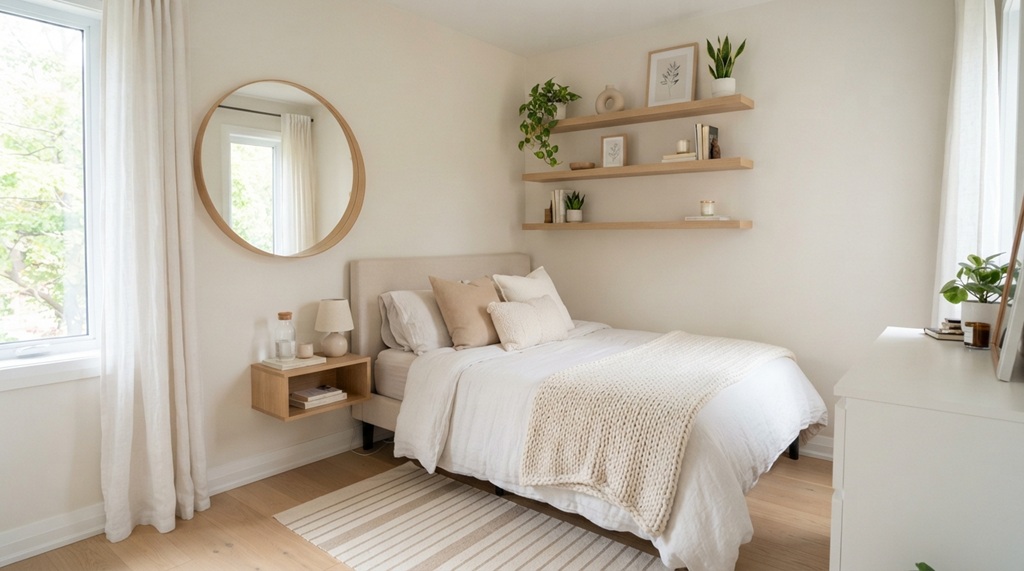
A small bedroom can look bigger with the right color choices, smart furniture layout, good lighting, and a few visual tricks that trick the eye. You don’t need to knock down walls or spend a fortune. You just need to make better decisions about what stays, what goes, and where everything sits.
Most small bedrooms feel cramped for the same three reasons: too much furniture, poor light, and clutter that has nowhere to hide. Fix those three things first, and the room already feels roomier before you buy a single new item.
This guide walks through practical, tested strategies. Each section stands on its own, so skip around if you already have a plan for part of the room.
Choose the Right Wall Colors and Finishes

Light, cool-toned colors make walls feel like they recede, which makes the room feel larger. Warm, dark colors do the opposite they visually pull walls inward and make ceilings feel lower.
Best Colors for a Small Bedroom
Soft whites, pale grays, and light blues work well because they reflect more light around the room. Even a warm off-white beats a stark, cold white in most bedrooms it feels calmer and still bounces light effectively.
If you love deep, moody colors, don’t rule them out completely. Paint one wall in a rich shade and keep the rest light. This creates depth without shrinking the whole room.
Finish Matters More Than People Think
A matte or eggshell finish hides wall imperfections better than gloss. But a slight sheen on the ceiling can bounce more light into the room. This one small swap often gets overlooked, yet it makes a real difference in how airy a room feels.
Use Multi-Functional Furniture
Furniture that does double duty saves floor space and cuts down on visual clutter, which makes the room read as bigger. A bed with drawers underneath, a bench that opens for storage, or a desk that folds against the wall all of these free up square footage you’d otherwise lose to separate pieces.
Furniture Pieces Worth Considering
- Storage beds: Built-in drawers replace a dresser entirely.
- Nightstands with shelves: They hold books and lamps without needing a separate shelf unit.
- Wall-mounted desks: These fold flat when not in use, which is ideal for tiny rooms that double as a home office.
- Ottomans with hidden storage: Perfect for extra blankets, and they double as seating.
Skip Bulky Pieces Entirely
A large, heavy dresser eats up more visual space than its actual footprint suggests. Swap it for slimmer, taller storage instead. Height doesn’t compete with floor space the way width does, so vertical storage almost always wins in a small room.
Mastering Light and Verticality to Expand Small Spaces
Maximizing natural illumination alongside strategic artificial lighting quickly softens heavy shadows, making a compact bedroom feel bright and expansive rather than boxed in. To preserve precious floor space while enhancing this open ambiance, shift your design focus to vertical walls: hanging large-format mirrors and strategic artwork effortlessly draws the eye upward, creating the visual illusion of soaring ceilings. If you are unsure how to position art without overcrowding your layout, hang a picture in all types of rooms to master key spacing, scale, and eye-level hanging heights.
Let Natural Light In
Keep window treatments light and simple. Sheer curtains let sunlight pass through while still offering some privacy. Avoid heavy drapes that block light or bunch up and eat into the window frame’s visual space.
Layer Your Lighting
One overhead light isn’t enough. Add a mix of sources: a floor lamp in a corner, a small table lamp, and maybe LED strip lighting under a shelf or bed frame. Layered light removes harsh shadows and makes the whole room feel more dimensional.
Use Mirrors to Bounce Light Around
A large mirror across from a window reflects natural light back into the room, which can make the space feel almost twice as bright. Position it carefully reflecting a cluttered corner won’t help, but reflecting a window or a clean wall will.
Create the Illusion of More Space With Design Tricks
Certain visual tricks genuinely make a small room read as larger, even though the square footage never changes. Designers rely on these constantly because they work on nearly any room shape.
Go Vertical
Draw the eye upward with tall bookshelves, floor-to-ceiling curtains, or artwork hung slightly higher than eye level. This pulls attention toward the ceiling and makes the room feel taller, which reads as more spacious overall.
Keep a Consistent Color Palette
Too many colors and patterns break up the visual flow of a room, and that fragmentation makes it feel smaller. Stick to two or three colors throughout the space, including the bedding, rug, and curtains, for a calmer and more expansive look.
Use a Large Rug, Not a Small One
A rug that’s too small makes the floor look choppy and the room look segmented. A properly sized rug one that extends under the bed and most of the furniture creates one continuous visual plane, which reads as more open floor space.
Float the Bed Instead of Boxing It In
Here’s an angle many articles skip: instead of pushing the bed flush into a corner with nightstands on both sides, try floating it a few inches off the wall, even in a small room. Leaving a small gap behind the headboard even just 2 to 3 inches creates a subtle buffer that keeps the room from feeling like the bed is wedged in. It also makes cleaning and bed-making noticeably easier, which matters more in small spaces where every inch of movement counts.
Declutter and Organize With Purpose

Visible clutter is one of the fastest ways to make any room, especially a small one, feel cramped and chaotic. A tidy room with fewer visible objects almost always looks and feels bigger than a full one, even at the exact same size.
Give Everything a Home
If an item doesn’t have a clear storage spot, it tends to end up on a surface, and surfaces that stay cluttered make a room feel busy. Use closed storage baskets, bins, or drawers over open shelving for anything that isn’t visually appealing.
Edit Down What You Own
A small bedroom can’t hold everything a large one can. Go through clothes, books, and decor items twice a year and remove what you don’t use. Fewer items mean less visual noise, and less visual noise means more perceived space.
Keep Surfaces Mostly Clear
A nightstand with one lamp and one book looks intentional. A nightstand covered in ten items looks messy, regardless of how nice each individual item is. The same rule applies to dressers, desks, and windowsills.
Add Cozy Textures Without Adding Clutter
A small bedroom can feel bigger and still feel warm and inviting if you choose textures carefully instead of piling on extra objects. Coziness comes from texture and softness, not from quantity.
Layer Textiles Thoughtfully
A soft throw blanket, one or two textured pillows, and a plush rug bring warmth without taking up real space. Stick to two or three textures like linen, knit, and velvet rather than five or six competing fabrics.
Bring in Warm Light at Night
Swap harsh white bulbs for warm-toned ones in the evening. Warm light (around 2700K to 3000K) makes a room feel cozier at night while the cooler, brighter light during the day still keeps the space feeling open.
Frequently Asked Questions
What color makes a small bedroom look bigger?
Light, cool-toned colors like soft white, pale gray, and light blue make a small bedroom look bigger because they reflect more light and don’t visually shrink the walls. Warm off-whites also work well if pure white feels too cold or clinical for your taste.
Should I use a small bed in a small bedroom?
Not necessarily a properly sized bed with good storage underneath often works better than downsizing to a smaller mattress. Choosing the right layout and freeing up floor space around the bed usually matters more than the bed size itself.
Do mirrors really make a room look bigger?
Yes, mirrors genuinely help, especially when placed across from a window or light source. They reflect natural light and create the illusion of depth, which makes the room feel more open without changing its actual dimensions.
Is dark paint ever okay in a small bedroom?
Yes, but use it carefully one accent wall in a deep color can add depth without overwhelming the room, as long as the rest of the walls stay lighter. Full dark paint on every wall usually makes a small room feel more closed in.
How do I make a small bedroom feel cozy without making it feel smaller?
Focus on texture and warm lighting instead of adding more furniture or decor items. A soft throw, a couple of textured pillows, and warm-toned bulbs at night add coziness without any extra clutter or lost floor space.
Final Thoughts
A small bedroom doesn’t have to feel small. Light colors, smart furniture, layered lighting, and a few well-placed design tricks go a long way toward making the room feel open and airy. Add texture and warm lighting on top of that, and the space feels cozy too, not cold or empty.
Start with one or two changes maybe a lighter paint color or a properly sized rug and build from there. Small, consistent updates almost always beat one big, expensive overhaul.