


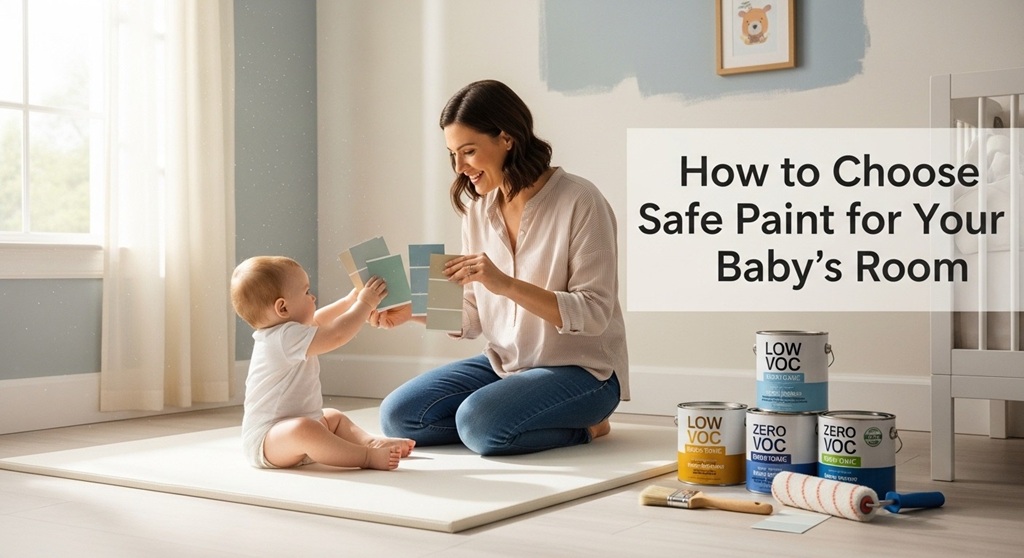
How to choose safe paint for baby’s room is a common question for parents preparing a nursery. Paint may look harmless, but many traditional paints release chemicals called volatile organic compounds (VOCs). These chemicals can affect indoor air quality and may irritate a baby’s lungs, skin, or eyes. Since infants spend most of their time indoors—often more than 90% of their early months—choosing low-toxicity paint becomes an important health decision.
Many people assume all interior paints are safe once dry. That assumption is not always accurate. Research from environmental health agencies shows that certain paints can continue releasing VOCs for weeks or even months after application. Babies are especially sensitive because their immune and respiratory systems are still developing.
This guide explains how to choose safe paint for your baby’s room in a practical way. You will learn what labels to look for, which ingredients to avoid, how VOC levels affect indoor air quality, and how to apply paint safely in a nursery. The goal is simple: create a clean, safe environment where your baby can sleep, play, and grow comfortably.
What Makes Paint Unsafe for a Baby’s Room?
Short answer: Paint becomes unsafe when it contains high levels of volatile organic compounds (VOCs), toxic solvents, or heavy metals that release harmful gases into the air.
Traditional paints often contain VOCs. These chemicals evaporate into the air during and after painting. According to the U.S. Environmental Protection Agency, indoor VOC concentrations can be two to five times higher than outdoor levels.
For adults, short exposure may cause headaches or irritation. For infants, the risks can be greater because their lungs are still developing.
Common symptoms linked to VOC exposure include:
- Eye and throat irritation
- Headaches
- Dizziness
- Respiratory discomfort
- Allergic reactions
In a nursery, maintaining clean indoor air matters. Babies breathe faster than adults and spend long hours sleeping in the same room. That increases the amount of air—and potentially chemicals—they inhale.
This is why low-VOC or zero-VOC paint has become a standard recommendation for nursery design.
What Are VOCs and Why Do They Matter in Nursery Paint?
Short answer: VOCs are chemicals that evaporate from paint and other household products, affecting indoor air quality.
VOC stands for volatile organic compound. These compounds easily become gases at room temperature.
Common sources of VOCs include:
- Paint and primers
- Paint thinners
- Cleaning products
- Furniture finishes
- Adhesives
When paint dries, VOCs evaporate into the air. This process is called off-gassing.
Some paints can continue off-gassing for weeks. In poorly ventilated rooms, VOC levels may remain high.
According to environmental health research, reducing VOC exposure can improve indoor air quality significantly. Many modern paints now offer low-VOC formulas to address this issue.
For nursery use, experts generally recommend paints labeled:
- Low VOC
- Zero VOC
- Non-toxic
- Green certified
These paints reduce chemical emissions and create a safer environment for infants.
How to Choose Safe Paint for Baby’s Room?
Short answer: Choose water-based, low-VOC or zero-VOC paint with verified safety certifications and minimal chemical additives.
When selecting nursery paint, look beyond color. Safety labels matter more.
1. Choose Low-VOC or Zero-VOC Paint
Low-VOC paints contain reduced levels of chemical solvents. Zero-VOC paints contain minimal VOCs—often less than 5 grams per liter.
This significantly reduces off-gassing.
2. Select Water-Based Paint
Water-based paints release fewer toxic fumes compared to oil-based paints.
They also dry faster and have less odor.
3. Look for Environmental Certifications
Reliable certification labels help confirm paint safety.
- GreenGuard Certification
- EcoLabel
- Green Seal
- LEED compliant
These certifications verify low chemical emissions.
4. Avoid Toxic Additives
Some paints contain additives that increase durability but may affect air quality.
Avoid paints with:
- Formaldehyde
- Benzene
- Toluene
- Heavy metals like lead or mercury
5. Choose Matte or Eggshell Finishes
Glossy paints sometimes contain additional solvents.
Matte or eggshell finishes often release fewer chemicals.
What Paint Ingredients Should Parents Avoid?
Short answer: Avoid paint containing formaldehyde, benzene, toluene, ammonia, and heavy metals.
Some chemicals used in paint manufacturing can affect indoor air quality.
Parents should review product ingredient lists carefully.
| Ingredient | Why It’s Harmful |
|---|---|
| Formaldehyde | Linked to respiratory irritation |
| Benzene | Known toxic compound |
| Toluene | May affect nervous system |
| Ammonia | Strong irritant |
| Lead pigments | Developmental risks for children |
Most modern paints no longer contain lead. However, checking the label remains a good practice.
When Should You Paint a Baby’s Nursery?
Short answer: Paint the nursery at least four weeks before the baby arrives to allow full ventilation.
Even low-VOC paints release small amounts of fumes.
Allowing enough drying time improves indoor air quality.
Recommended preparation timeline:
- Paint room 4–6 weeks before due date
- Keep windows open for ventilation
- Use fans to circulate air
- Avoid placing crib near freshly painted walls
This waiting period helps ensure the room is safe when the baby begins sleeping there.
What Colors Are Best for a Baby’s Room?
Short answer: Soft, neutral colors help create a calm environment and reduce overstimulation.
Color does not affect paint safety directly, but it influences the nursery atmosphere.
Many pediatric design experts suggest calm tones.
Popular nursery colors include:
- Soft beige
- Light gray
- Pale blue
- Sage green
- Muted lavender
Bright colors may feel stimulating. Soft tones create a relaxing space for sleep and feeding.
Case Study: How Low-VOC Paint Improved Nursery Air Quality
A small indoor air quality study conducted during residential renovation projects compared rooms painted with standard paint and low-VOC paint.
The results showed measurable differences.
| Paint Type | Average VOC Level After 48 Hours |
|---|---|
| Traditional Interior Paint | 250–300 µg/m³ |
| Low-VOC Paint | 40–60 µg/m³ |
Lower VOC levels reduce exposure risks, especially in rooms used by infants or children.
This data highlights why many nursery designers and pediatricians recommend low-VOC paint as a precaution.
How Can You Paint a Nursery Safely?
Short answer: Proper ventilation, protective gear, and curing time reduce exposure during painting.
Even safe paints should be applied carefully.
Steps for Safe Nursery Painting
- Open windows and doors for airflow
- Use fans for ventilation
- Wear a mask if painting indoors
- Allow at least 72 hours drying time
- Keep the baby out of the room during painting
Good airflow is one of the most effective ways to reduce indoor pollutants.
Are Natural or Organic Paints Better for Nurseries?
Short answer: Natural paints made from plant oils, clay, or mineral pigments may contain fewer synthetic chemicals.
Some eco-friendly paints use natural ingredients instead of synthetic solvents.
Common natural paint ingredients include:
- Clay
- Plant oils
- Lime
- Natural pigments
- Milk protein (casein)
These paints are often used in eco-friendly homes.
However, they may cost more and have fewer color options.
Parents choosing natural paint should still confirm certification and VOC levels.
Conclusion: Creating a Safer Nursery Environment
Choosing safe paint for a nursery is not only about design. It is about protecting indoor air quality during a baby’s most sensitive developmental stage.
The key steps are simple:
- Choose low-VOC or zero-VOC paint
- Select water-based formulas
- Check environmental certifications
- Avoid harmful chemicals
- Allow proper drying time before use
These decisions help reduce exposure to airborne chemicals and create a healthier space for sleep, play, and growth.
If you are preparing a nursery soon, take time to review paint labels carefully. A small decision today can make a meaningful difference in your baby’s indoor environment.
Planning a nursery makeover? Start by selecting safe, low-VOC paint and building a calm, healthy space your baby will enjoy every day.
Frequently Asked Questions
Is zero-VOC paint completely chemical free?
No. Zero-VOC paint still contains some chemicals, but the level of volatile organic compounds is extremely low compared to traditional paints.
How long should a nursery air out after painting?
Most experts recommend ventilating the room for at least 3–7 days before placing furniture or allowing a baby to sleep there.
Can paint smell harm a baby?
Strong paint odors often indicate VOC emissions. High exposure may irritate the respiratory system, which is why low-VOC paint is recommended for nurseries.
Is water-based paint safe for babies?
Water-based paints generally release fewer fumes and are considered safer than oil-based paints for indoor use.
Do all low-VOC paints have no smell?
No. Some low-VOC paints still have a mild odor, but the chemical emission levels are much lower than standard paints.
Should babies be in the house during painting?
It is safer to keep babies out of freshly painted areas until the room is fully ventilated and dry.
Are eco-friendly paints worth the cost?
Eco-friendly paints may reduce indoor air pollution and are often preferred in nurseries, especially for families focused on healthier living environments.
Read More Also: Sink Savvy: A DIY Guide to Fixing Leaking Pipes Beneath Your Sink
Find out: How to Create a Garden That Blooms All Year Round